If you've spent any time reading labels on natural skincare or herbal remedies, you've likely seen both "essential oil" and "herbal infusion" listed as ingredient types. They sound similar — both involve plants, both smell botanical — but they represent fundamentally different approaches to extracting and delivering plant medicine.
Understanding the difference will help you make better decisions about which products actually suit your needs.
What Is Essential Oil Dilution?
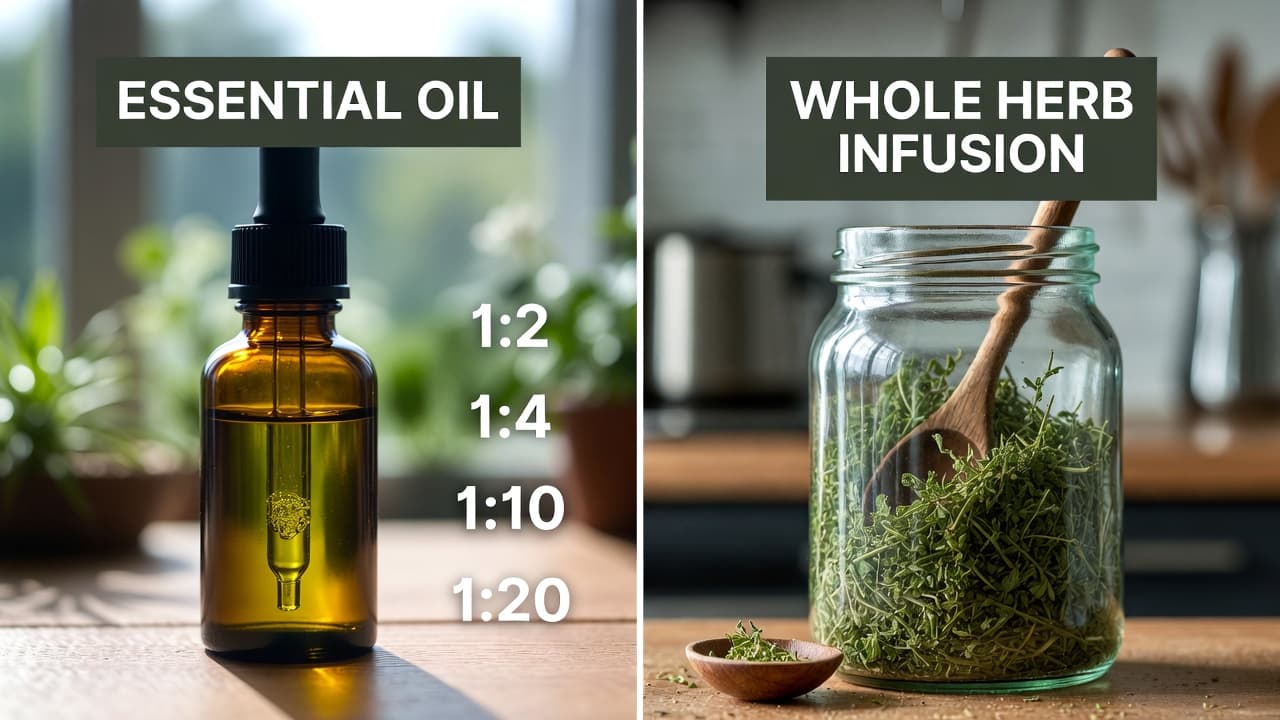
Essential oils are highly concentrated volatile aromatic compounds extracted from plant material, almost always through steam distillation or cold pressing (for citrus peels).
During steam distillation, steam passes through the plant material, carrying the volatile compounds with it. That steam is then condensed back into liquid, which separates into essential oil (the aromatic compounds) and hydrosol (the water-soluble fraction).
The result is extremely potent. Pure lavender essential oil, for example, contains roughly 100 times the aromatic compounds present in the same weight of dried lavender flowers. This potency is both its strength and its risk.
The dilution part refers to mixing a small percentage of essential oil (typically 1–3% for leave-on skin products) into a carrier oil like jojoba, sweet almond, or fractionated coconut oil. This diluted blend is then what actually contacts your skin.
What Is a Whole Herb Oil Infusion?
An herbal oil infusion takes the opposite approach. Instead of extracting concentrated volatile compounds from fresh plant material, you steep dried herbs directly in a carrier oil over time.
The carrier oil acts as a solvent, slowly drawing out the fat-soluble constituents of the plant: certain flavonoids, carotenoids, fat-soluble vitamins, plant sterols, and a portion of the herb's aromatic compounds. The herbs sit in the oil for anywhere from a few days (with gentle heat) to several weeks (a solar cold infusion), and are then strained out.
The result is an oil that's infused with a broad range of plant constituents — not just the volatile fraction that steam distillation captures, but a wider phytochemical profile.
Key Differences Side by Side
| Essential Oil Dilution | Whole Herb Infusion |
|---|
| Potency | Very high (requires dilution) | Moderate, well-rounded |
| Compounds captured | Volatile aromatics primarily | Broader phytochemical profile |
| Skin tolerance | Higher sensitization risk at wrong dilution | Generally gentler |
| Shelf life | Long | Depends on carrier oil quality |
| Aroma | Strong, precise | Subtle, herbal |
| Whole-plant benefit | Partial | More complete |
Which Is "Better"?
Neither method is objectively superior — they serve different purposes.
Essential oils excel when you want a precise, powerful aromatic effect or a highly concentrated dose of a specific compound. They're also easier to manufacture at scale, which is why they dominate commercial skincare formulations.
Whole herb infusions are better suited when:
- You want the full complement of plant constituents, not just the volatile fraction
- You're making products for sensitive skin or children
- You value the traditional craft of herbalism and the connection to the actual plant
- You want the oil itself to carry therapeutic benefit before anything else is added
InVine's Approach
InVine Botanicals uses solar-infused whole herb oils as the base of every balm. Herbs grown in InVine's own Florida garden are harvested at peak potency, dried, and then steeped in cold-extracted organic oils for weeks under natural sunlight.
This slow process produces an oil that's fundamentally different from mixing a carrier oil with a few drops of an essential oil purchased wholesale. The herbs' fat-soluble constituents have had weeks to migrate into the oil, creating a base that does meaningful therapeutic work before a single drop of essential oil is added.
Where an essential oil does appear in an InVine formulation — such as tea tree in the Bug Bite Balm — it's because that specific volatile compound provides something the infusion alone doesn't deliver as efficiently.
The result is a layered botanical product: the depth of a whole-plant infusion, finished with the targeted precision of a carefully chosen essential oil.
When you're reading a product label, look past "contains essential oils" and ask: what's the base? If it's a pre-infused oil, that's the sign of a more considered formula.