The full timeline of a small-batch herbal balm — from the moment seeds go into Florida soil to the moment a jar gets sealed — is measured in months. That's not unusual for genuinely hand-crafted botanical products. It is, however, completely alien to the way most personal care products are manufactured.
Understanding what happens at each stage explains not only why small-batch production matters, but why the timelines can't be compressed without losing something real.
Starting in the Ground
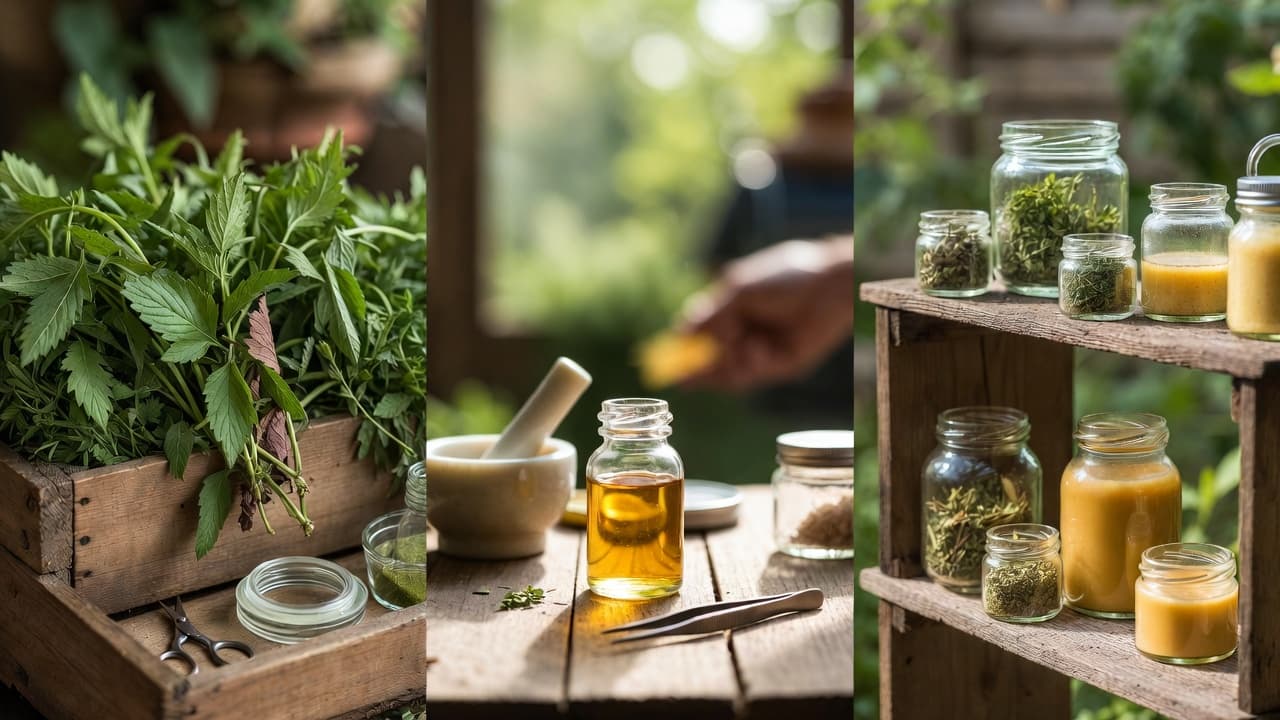
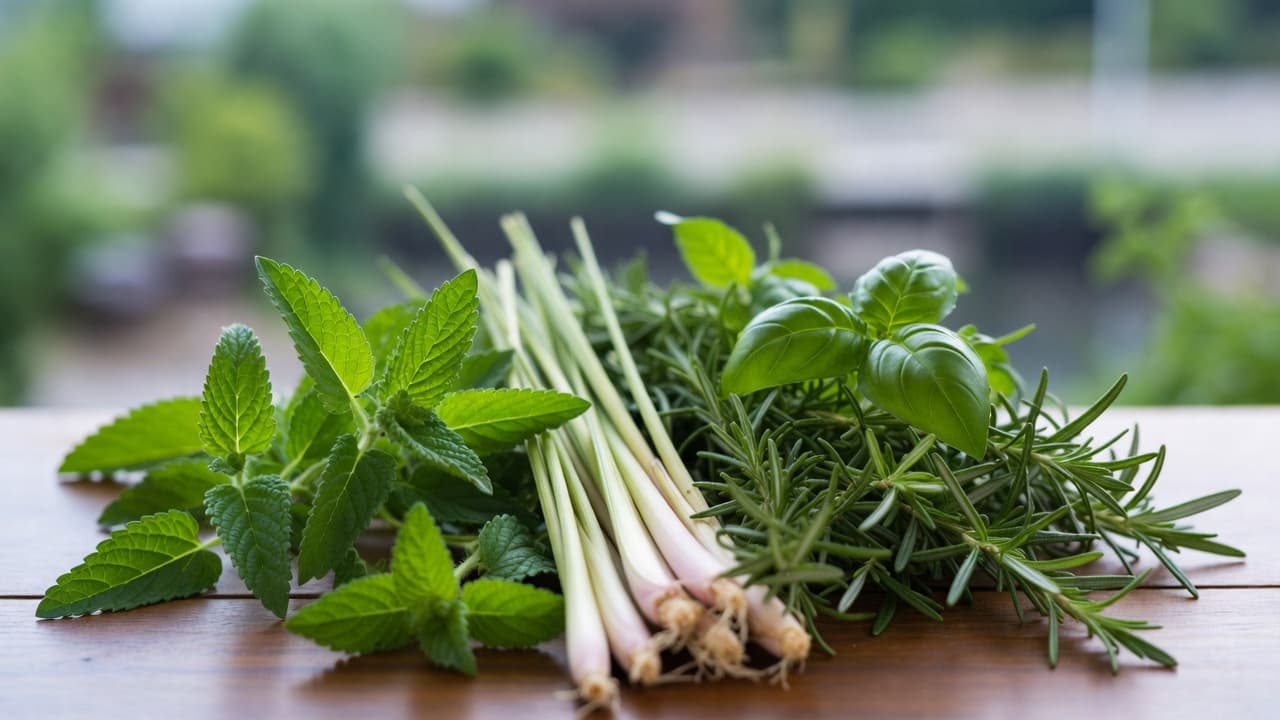
Every herb that goes into an InVine infusion — lemongrass, lemon balm, rosemary, sweet basil, lemon mint, peppermint, spearmint, lemon thyme, ginger, turmeric, and cayenne — is grown in InVine's garden in Tallahassee, Florida.
This matters for reasons that go beyond marketing language. When you grow the herbs yourself, you control the variables that most directly determine compound concentration: soil chemistry, irrigation timing, whether any inputs are being used that could appear in the final infusion, and above all, harvest timing.
Commercial herb suppliers guarantee weight. They cannot guarantee potency, because they can't guarantee the conditions under which every batch was grown or the precise stage at which it was harvested.
Harvesting at Peak Potency
Plant chemistry isn't static. The concentration of the compounds that make herbs therapeutically useful — rosmarinic acid in rosemary, menthol in peppermint, gingerols in ginger, citral in lemongrass — fluctuates with time of day, stage of plant development, and season.
Most culinary herbs reach their highest volatile compound concentration just before flowering. After flowering, the plant redirects energy toward seed production and the leaves become more fibrous and less aromatic. A rosemary plant harvested mid-bloom is not at its peak — the window just before the first flowers open usually is.
Time of day matters too. Volatile aromatic compounds are typically highest in the morning, after dew has evaporated but before midday heat begins driving them off. Florida summers intensify this effect. A harvest at 8 a.m. and a harvest at 2 p.m. from the same plants produce measurably different aromatic intensity — and aromatic intensity in these herbs is a proxy for compound concentration.
None of this is captured in a weight measurement on a purchase order. It requires knowing the plants, watching them week to week, and cutting at the right time. That's the kind of attention that doesn't survive industrialization intact.
Drying: The Step That's Easy to Rush
Fresh herbs contain significant water content — sometimes 70–80% by weight. That water needs to be removed before infusion for two reasons: water in an oil-based formula promotes microbial growth, and the compounds you're after in an oil infusion are fat-soluble, not water-soluble.
The drying needs to be thorough without destroying what you're trying to preserve.
Too fast and too hot — high-temperature oven drying, for example — drives off volatile compounds alongside the moisture. The herb looks dry, but its chemistry has been simplified. Too slow or in humid conditions, and the herbs can begin to mold before moisture is fully gone.
The right approach is low heat and good airflow over an appropriate time window: typically 7–14 days for leafy herbs, longer for roots like ginger and turmeric. In Florida's humid climate, this requires active management. Dedicated drying space with controlled airflow and regular inspection isn't optional — it's what separates usable dried herbs from a batch that goes in the compost.
Properly dried herbs retain their color and aroma intensity. Dull color and muted scent after drying signal that the process moved too fast or too hot.
The Infusion: Four to Six Weeks in the Sun
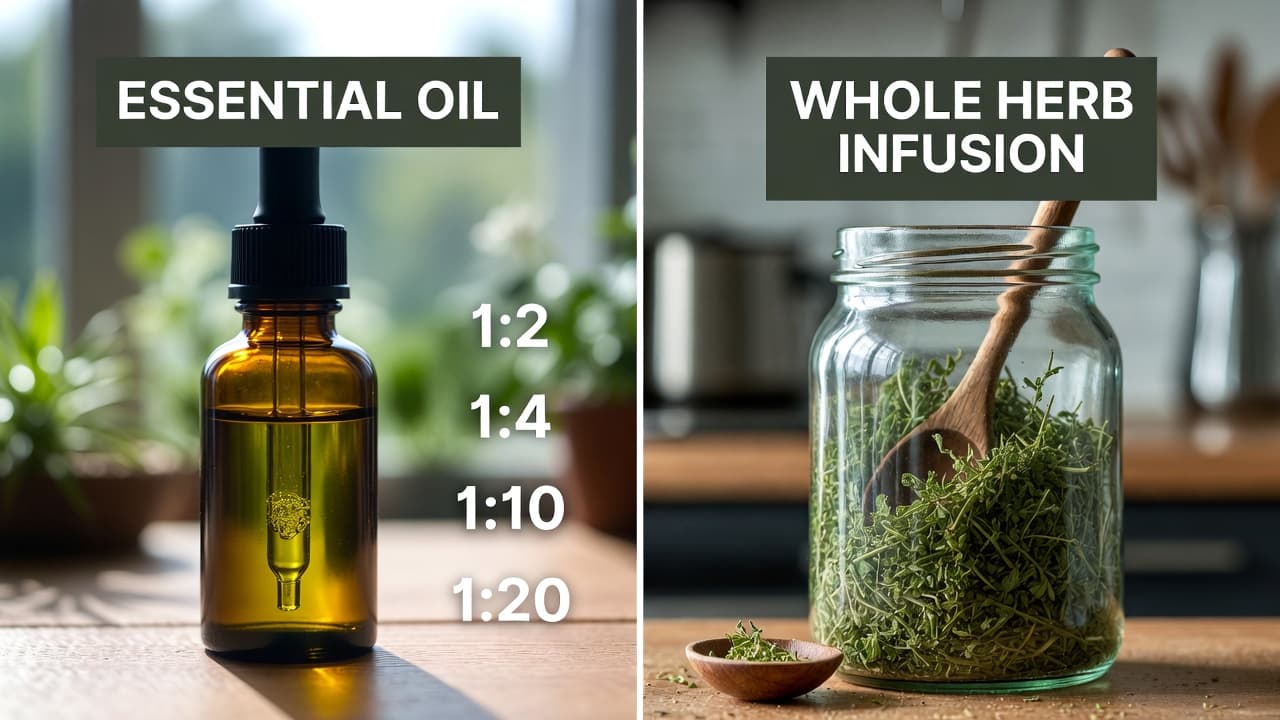
Once dried, the herbs go into glass jars with organic olive oil — the primary infusion medium — and the jars go into full sunlight for four to six weeks.
Solar infusion is a traditional method that uses the low, sustained warmth of natural sunlight rather than applied heat. The sun gently warms the oil throughout the day, encouraging fat-soluble compounds to migrate from plant matter into the oil over an extended period. The jars cool at night, and the thermal cycling actually aids extraction by gently expanding and contracting the plant material.
What you get from six weeks of solar infusion is a broader compound profile than a faster hot-process extraction provides. Slow, low-temperature extraction preserves more of the delicate volatile compounds while still fully drawing out the heavier, less volatile actives. Industrial extraction optimizes for speed and batch consistency. Solar infusion optimizes for the compound spectrum you'd get from the whole plant over time.
The jars are turned regularly, checked, and kept in direct sun throughout. This isn't passive monitoring — it's a process that requires daily attention to be done well.
Straining and Combining
After the infusion period, the oil is strained from the plant matter through cheesecloth. What remains is an oil that looks like the original carrier oil but smells — and performs — entirely differently. The color deepens. The scent shifts from raw herb to something warmer and more complex.
At this stage, the infused olive oil is combined with organic coconut oil, which contributes its own antimicrobial and structural properties to the base. The blend is then gently heated with beeswax sourced from a local Tallahassee beekeeper until the wax just melts into the oil.
Essential oils are added during the cooling phase — after the main heat — to preserve their volatile aromatic compounds. Vitamin E oil goes in at the same stage, where it begins its work protecting the formula's lipids from oxidation.
Pouring, Setting, and Inspection
The liquid balm is poured into tins while still warm enough to flow, then left to cool and set undisturbed. Cooling takes an hour or more depending on ambient temperature, and the balm needs to be left alone during this period — disturbing it while it's setting can affect surface texture and consistency.
Each tin is inspected individually before labeling. Small-batch production makes this feasible in a way that larger-scale production cannot. When you're working with a batch of two hundred units rather than two thousand, you can look at each one — check the surface, confirm the scent, catch any anomaly before it leaves your hands.
This is the part of small-batch production that shows up in the product in ways that can't be quantified on a specification sheet.
What Gets Lost at Scale
The temptation with any successful small-batch product is to scale up while keeping the label. Industrial production can replicate most of the inputs — similar herbs, similar oils, similar ratios. What it struggles to replicate is the decision density at each stage.
A grower who tends forty herb plants notices things that a contract farm managing forty acres cannot. A producer who checks each jar of infusion weekly sees what a factory QA pull-sample doesn't flag. A packager who inspects each tin by hand catches what automated line inspection misses.
This isn't romanticism about small-batch production for its own sake. It's an acknowledgment that certain quality attributes require human attention at a scale that industrial efficiency systematically eliminates.
The months between garden and jar aren't delay. They're the product.