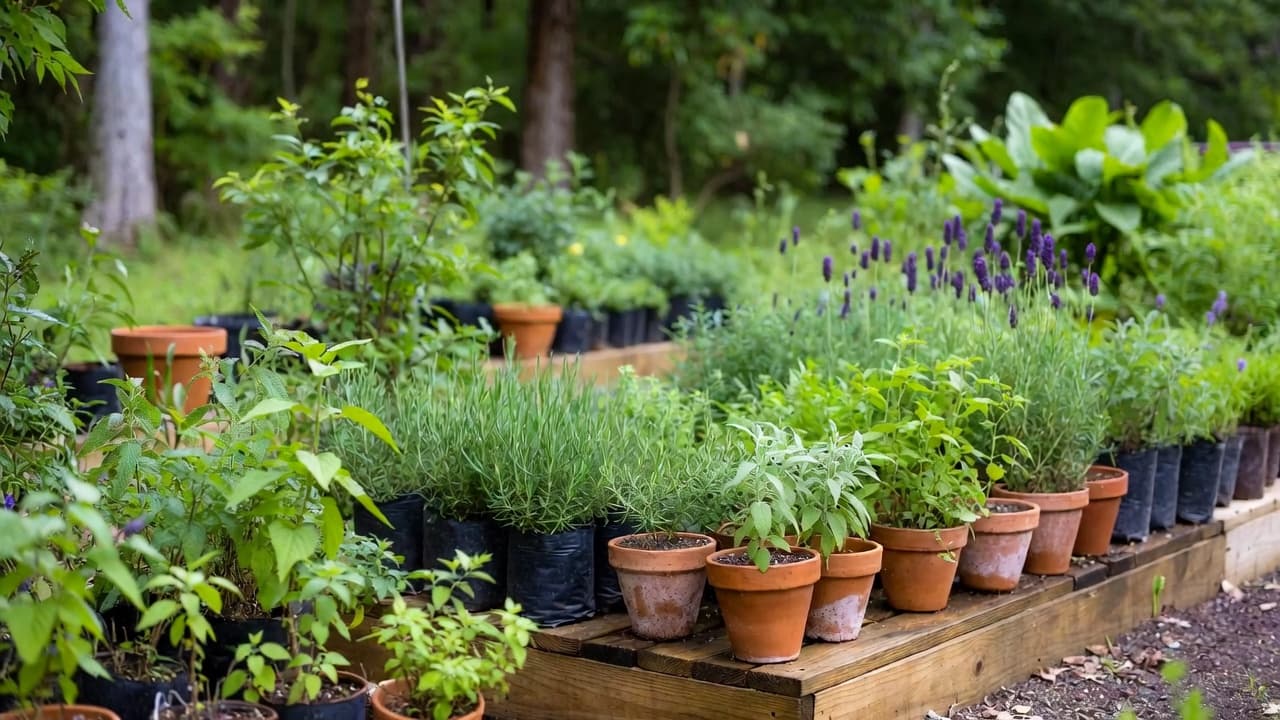
Every herb garden is shaped by its climate, and Florida's is unforgiving in specific ways. The summer heat — consistent 90°F days from May through September — stresses plants that prefer cooler conditions. The humidity breeds fungal pressure. The soil, particularly in North Florida, drains fast and needs consistent amendment to hold the moisture and nutrients that herbs need to thrive.
And yet: the plants that do thrive here are extraordinary. Full sun for nine months of the year means faster growth, higher essential oil concentration, and aromatics that are richer and more intense than anything grown in a greenhouse up north. Florida's intensity is the garden's intensity. When a lemongrass plant survives and produces all summer, it has earned its reputation.
The Herbs That Belong Here
All but one of the herbs in InVine's formulas are grown right here in the garden — including turmeric, ginger, and cayenne, which are tropical plants that thrive in a Florida summer. Black pepper is sourced, as are the essential oils, carrier oils (organic olive and coconut oil), beeswax — from a local Tallahassee beekeeper — and vitamin E. But every herb that goes into the infusion itself is either homegrown or carefully sourced. A few of these plants don't just tolerate Florida's climate — they genuinely prefer it.
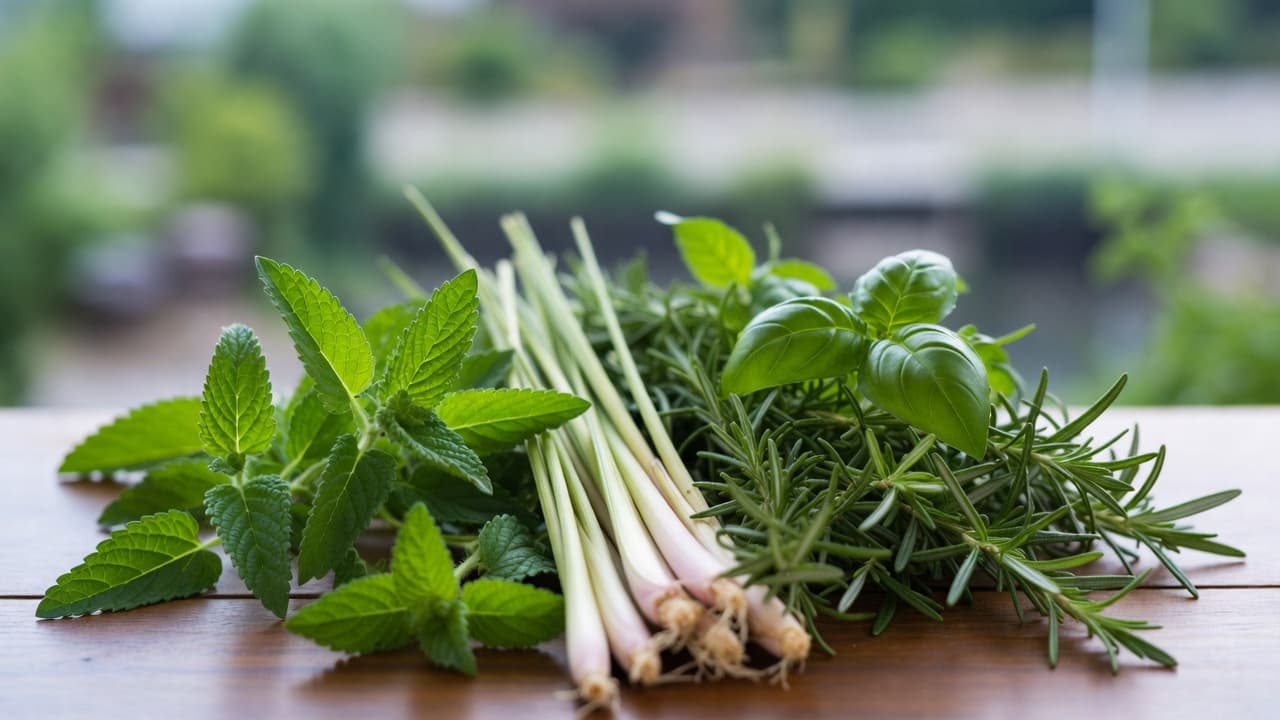
Lemongrass is native to tropical Southeast Asia and is entirely at home in a Tallahassee summer. It grows in large, dense clumps and can reach five feet tall in a single season. The essential oil concentration is highest in full sun and high heat — the stress of the climate actually concentrates the citral content that makes lemongrass medicinally valuable.
Rosemary grows year-round in North Florida. It's borderline invasive here in the best possible way — it doesn't die back in winter, it seeds freely, and it produces continuously through conditions that would kill Mediterranean rosemary in a cold climate. The flavor and aromatic profile of Florida-grown rosemary is noticeably more intense than commercial dried rosemary.
Sweet basil is a summer herb that wants exactly what Florida provides: heat, humidity, and full sun. It bolts to flower quickly in the long days, which means constant harvesting to keep it in the vegetative stage — but that harvesting rhythm also means a continuous supply of the most potent leaves, taken before the plant puts energy into seed production.
Lemon balm grows readily in the partial shade of taller plants, which is useful for maximizing garden space. It's a spreader and can take over a bed if not managed, but its rosmarinic acid content is highest when it's slightly stressed — not too much shade, not full summer sun.
Turmeric is a tropical rhizome and a natural fit for Florida's long, hot summers. It grows slowly — taking the full warm season to develop substantial rhizomes underground — but it produces reliably in North Florida with rich, amended soil. The curcumin complex that makes turmeric valuable as an anti-inflammatory develops in the root over time, which means patience at harvest is required. Fresh-dried, home-grown turmeric root has an aroma and depth that commercially dried and shipped turmeric simply doesn't.
Ginger grows alongside turmeric in the same protected, amended beds. Like turmeric, it needs a long warm season, but it's a reliable producer in North Florida and rewards the attention. The gingerols and shogaols responsible for ginger's warming, circulation-boosting effects are most concentrated in freshly dried home-grown root — a quality that's hard to source and easy to taste.
Harvest Timing Is Everything
The most important thing Florida has taught me about growing medicinal herbs is that timing overrides almost everything else.
Essential oil concentration in most herbs peaks just before flowering — or at first bud, in some species. This is when the plant is channeling maximum energy into the compounds that attract pollinators: the terpenes, the flavonoids, the aromatic compounds that also happen to be the therapeutically active ones. Once the plant flowers fully and sets seed, that concentration drops as energy goes elsewhere.
In Florida's long growing season, this window can be surprisingly short. Basil can go from ideal harvest to full flower in a matter of days during peak summer heat. You learn to watch the plants constantly and harvest when they tell you to, not when it's convenient.
The herbs are then dried slowly — hung in small bunches in a shaded, ventilated space — until the moisture content is low enough for safe oil infusion. Drying too fast with forced heat drives off volatile compounds. Drying too slowly invites mold. The Florida humidity means this step requires more attention here than it would in an arid climate.
What the Process Demands
Starting from your own garden means accepting that your supply is seasonal and variable. A wet spring might delay the rosemary harvest. A pest pressure might reduce the lemon balm yield. You can't buffer that variability with a purchase order the way a commercial manufacturer can.
What you get in return is certainty about provenance. I know when each herb was harvested, how it was dried, and how long it's been in infusion. I know the soil it came from and what was added to it. That chain of knowledge from ground to jar is not something you can buy from a wholesale supplier, and it's not something that appears on any certification.
It shows up, instead, in the oil — in a depth and roundness that a formula built on purchased botanical extracts doesn't have.
The garden doesn't move on your timeline. You move on its. That adjustment, once you make it, changes how you think about everything you make.