Most vapor balms work through misdirection. Menthol — the active compound in conventional chest rubs — doesn't actually open your nasal passages. It stimulates cold receptors in the nose that create the sensation of clearer breathing without meaningfully changing airflow. It's a perceptual trick, and it works well enough that we've accepted it for generations.
Botanically-formulated vapor balms, when made with care, do something more.
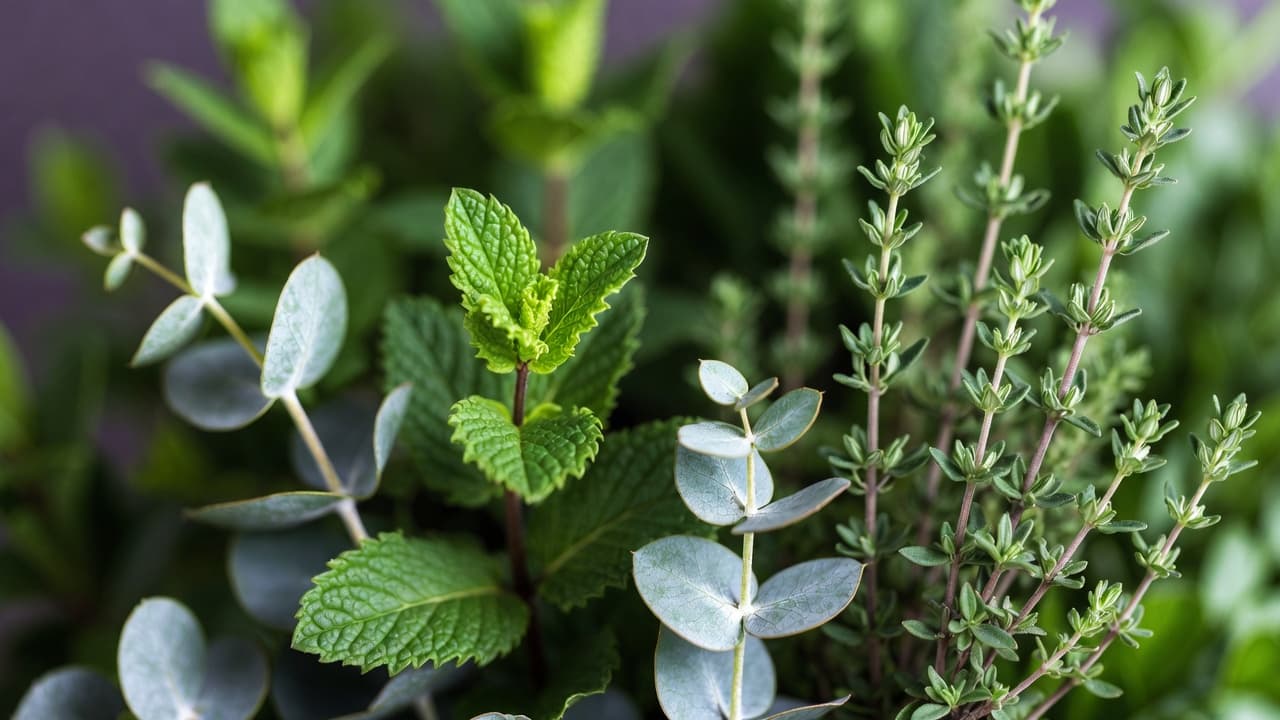
Peppermint (Mentha x piperita)
Peppermint is the anchor of any serious respiratory formula, and the reason is menthol — but menthol from a whole-herb infusion behaves differently than isolated menthol crystals.
Whole peppermint contains menthol alongside menthone, menthofuran, limonene, and a range of flavonoids. These compounds work together: menthol stimulates TRPM8 cold receptors (that familiar cooling sensation), while menthone and the flavonoid fraction exert anti-inflammatory effects on the mucous membranes of the upper respiratory tract.
There's also genuine bronchodilation at work. Animal studies and some human trials have shown that menthol exposure, particularly through inhalation, causes relaxation of bronchial smooth muscle — which means peppermint isn't only affecting your perception of breathing. It's making actual physical space.
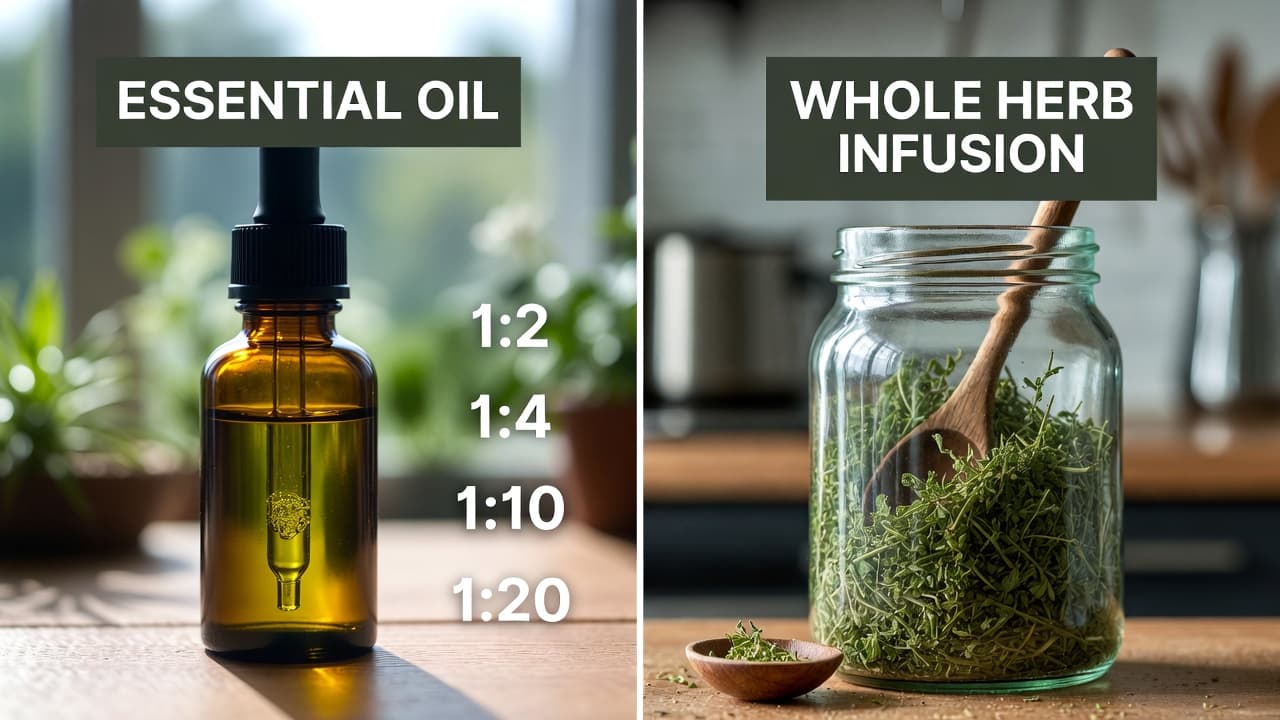
A slow oil infusion captures both the volatile aromatics and the fat-soluble flavonoids, giving peppermint's full profile rather than just its most famous compound.
Eucalyptus (Eucalyptus globulus)
Eucalyptus is the most pharmacologically active herb in the formula. Its primary compound, 1,8-cineole (also called eucalyptol), is well-studied enough that it's been investigated as a pharmaceutical treatment for chronic obstructive pulmonary disease and sinusitis.
The mechanism is straightforward: 1,8-cineole is a mucolytic. It thins and loosens mucus in the airways and sinuses, making congestion physically easier to clear. It also has documented anti-inflammatory and antimicrobial properties, which is why eucalyptus has been a first-line respiratory herb across dozens of traditional medicine systems globally.
Applied to the chest or temples, eucalyptus essential oil begins vaporizing immediately at skin temperature. The inhaled compounds reach the respiratory tract within seconds.
Spearmint (Mentha spicata)
Spearmint shares peppermint's family but has a distinct phytochemical profile. Its dominant compound is carvone rather than menthol — softer and less sharp, which makes spearmint the herb that rounds out peppermint's intensity rather than duplicating it.
Carvone has demonstrated antispasmodic properties, which matters for the coughing and airway tension that accompany congestion. Where peppermint is stimulating and clarifying, spearmint is calming — it soothes irritated airways rather than opening them aggressively.
For chest congestion specifically, the combination of peppermint's bronchodilation and spearmint's antispasmodic action means the formula addresses both the physical blockage and the spasm and tightening that often accompany it.
Lemon Thyme (Thymus citriodorus)
Thyme has one of the longest documented histories in respiratory herbalism. Medieval European physicians used it for lung conditions; modern research has validated the direction, if not the full detail.
Thyme's primary active compounds — thymol and carvacrol — are potent antimicrobials with specific activity against respiratory pathogens. Thymol in particular has been studied for its ability to inhibit the bacteria most associated with secondary respiratory infections, including Streptococcus and Haemophilus influenzae.
Lemon thyme, the variety used in Breathe Free Balm, has a citrus-forward aromatic profile that contributes to the formula's overall scent while delivering the same thymol and carvacrol content as standard thyme.
Why Topical Application Works for Respiratory Conditions
It's a reasonable question: how does something on your chest affect your sinuses?
The answer is inhalation. When a balm containing volatile aromatic compounds is applied to warm skin, those compounds vaporize continuously and are inhaled with each breath. The therapeutic effect comes through the respiratory tract, not through dermal absorption into circulation.
This is why the aroma of a well-formulated vapor balm doesn't fade quickly the way perfume does — the oils are continuously releasing volatile compounds as they interact with body heat. And it's why the quality of those botanical compounds, captured through weeks of whole-herb infusion rather than brief essential oil addition, determines how effective the product actually is.
When you breathe in a botanical vapor balm and feel your chest open, that's not imagination. That's 1,8-cineole doing what it's documented to do.