Most of herbal manufacturing has a timeline problem: the commercial incentive is to move fast. Quick solvent extraction, standardized concentrates, spray-dried powders. These methods produce consistent, measurable, scalable ingredients. They also reduce plants to a narrow subset of their chemistry.
Solar infusion — the oldest method in botanical craftsmanship — moves at the opposite pace. And that slowness is precisely the point.
What Solar Infusion Actually Is
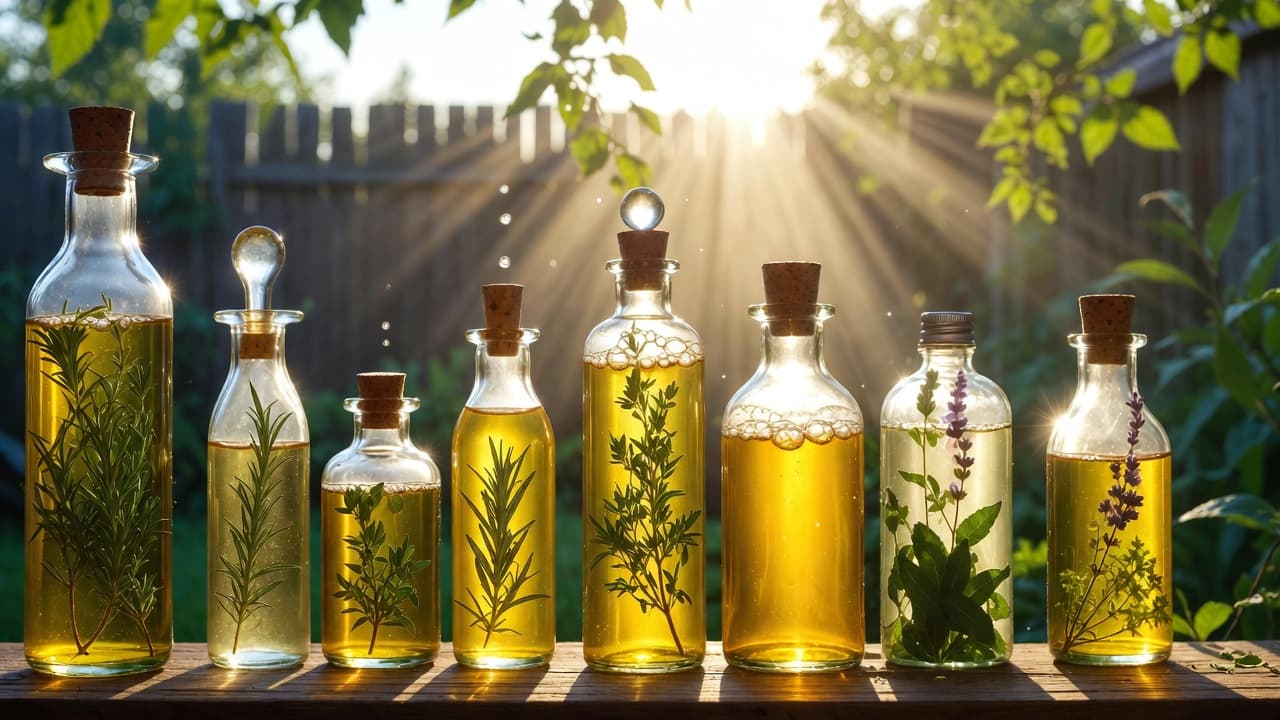
A solar infusion (also called a cold infusion) is exactly what it sounds like: dried herbs are combined with a carrier oil in a sealed jar and left in sunlight for an extended period, typically four to six weeks.
No heat is applied artificially. No solvents are used. The oil simply surrounds the plant material, and time — assisted by the gentle, consistent warmth of the sun — does the rest.
The carrier oil acts as a fat-soluble solvent. Over weeks, it draws out the fat-soluble constituents of the dried herb: certain flavonoids, carotenoids, plant sterols, chlorophylls, fat-soluble vitamins, and a portion of the plant's aromatic compounds. At the end of the infusion, the herbs are strained out and the resulting oil carries their character within it.
Why Weeks, Not Days?
The compounds being extracted aren't all equal in their migration rate. Some fat-soluble molecules move into the oil quickly — within the first few days. Others are more tightly bound to plant cell structures and require sustained contact to be released.
A three-day hot infusion (using a slow cooker or warm water bath) will capture the fast-moving fraction efficiently. It will miss much of what takes time.
There's also a structural reason: the slow diffusion process at lower temperatures preserves thermally sensitive compounds that would be denatured by heat. Certain flavonoids and phytosterols that might be altered or destroyed at 140°F are fully intact after weeks at ambient temperature.
The difference isn't just theoretical — it's detectable in the oil's character. A six-week solar infusion of lemon balm in olive oil has a depth and roundness that a quick hot infusion simply doesn't match.
The Role of Sunlight
The sun's role is primarily thermal — it maintains a gentle, consistent warmth through the glass jar, keeping the oil just warm enough to remain fluid and mobile without the temperature spikes that artificial heat sources can create.
There's also a photochemical dimension that isn't fully understood but has been recognized in traditional herbalism for centuries: certain plant compounds respond to light exposure during the infusion process in ways that may enhance the activity of the final oil. Whether this represents a measurable chemical transformation or simply the effect of sustained gentle warmth is an interesting question that modern herbalism is only beginning to investigate properly.
What herbalists have known empirically for a very long time is that sun-infused oils behave differently from heat-processed ones.
What This Means for the Final Balm
When InVine's balms are formulated, the carrier oils are already the remedy. The beeswax is added to give the infused oils a workable, skin-adhering texture — not to carry active compounds itself.
This is why the ingredient list looks the way it does: whole herbs listed first, carriers listed as what they are. The herbs aren't decoration or marketing language. They've been in contact with that oil for weeks, and what you're applying to your skin is the result of that relationship.
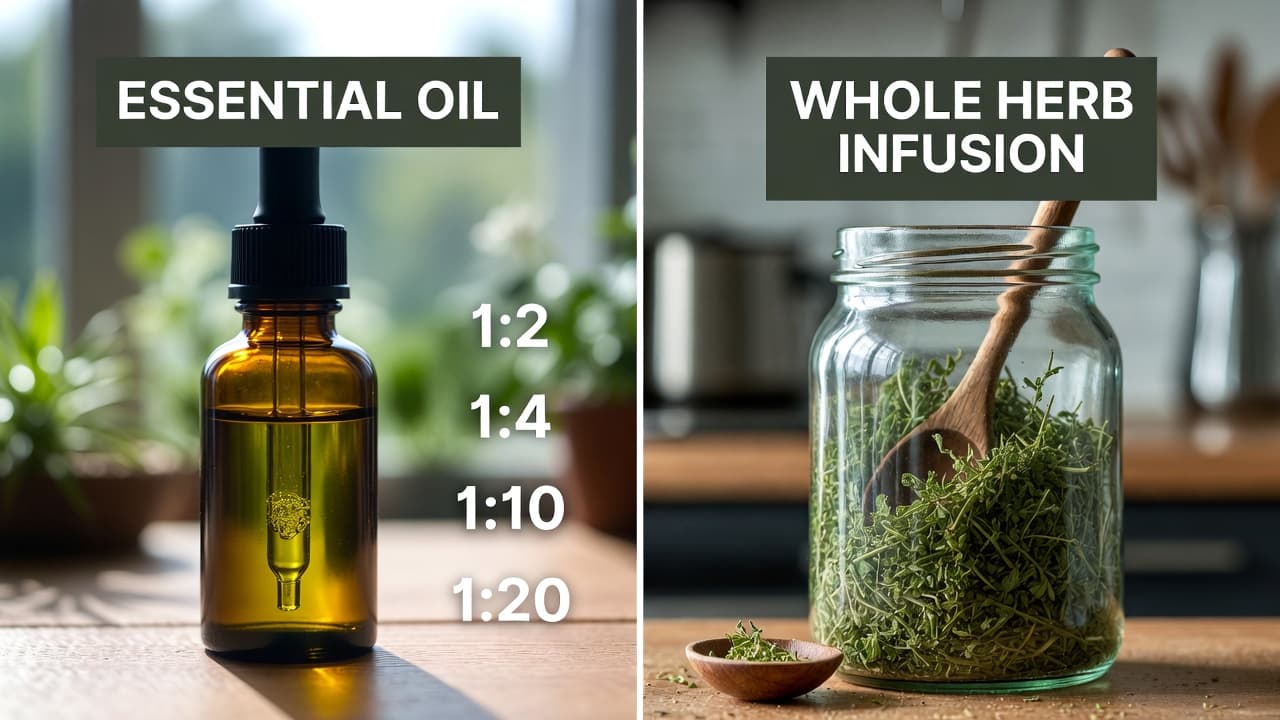
The essential oils added at finish — tea tree in Bug Bite Balm, eucalyptus and peppermint in Breathe Free and Muscle Revive — are there because those specific volatile compounds are best delivered in concentrated form. But they're additions to an already-active base, not the primary event.
Why Speed Has a Cost
The commercial herbal industry has largely moved away from true infusion because it doesn't scale well. You can't speed it up meaningfully without compromising the result. You can't standardize it to a specific compound concentration. You can't run it through an automated system.
For a small-batch Florida studio making balms in limited quantities, this is a feature. The process stays slow because the product is better when it does.
The jar sitting in the sun for six weeks isn't waiting. It's working.