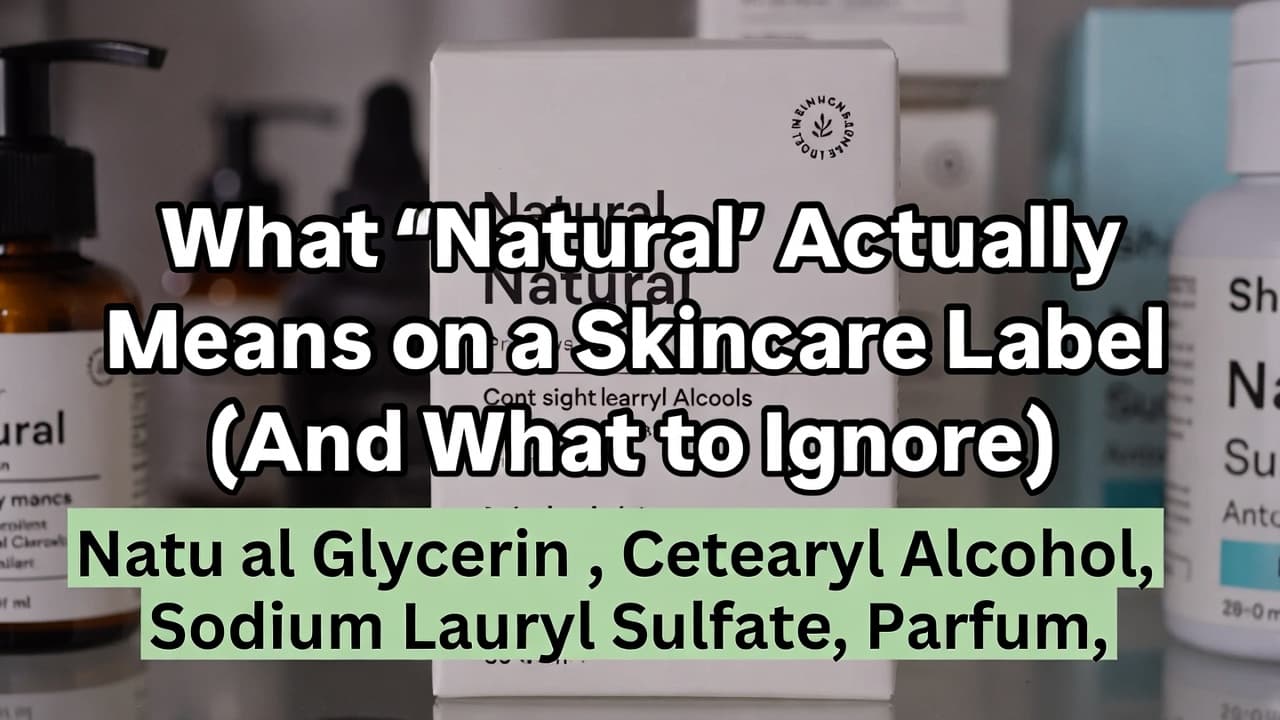
"Natural." "Plant-based." "Botanical formula." "Herb-infused." These phrases are everywhere on personal care product labels, and not one of them is legally defined or regulated by the FDA in the context of cosmetics.
That's not a technicality worth burying — it's the most important thing to understand when you're standing in a store or scrolling a product page trying to make a genuine choice. In the absence of legal definitions, these words mean whatever the person writing the label wants them to mean.
Here's how to look past them.
Start With the Ingredient List, Not the Front Panel
Everything on the front of a skincare product is marketing copy. The ingredient list on the back panel — the one in small print, listed in order of concentration from highest to lowest — is the actual product.
A product that leads with "enriched with botanical extracts" on the front might list those extracts as the second-to-last ingredient, meaning they're present in trace amounts smaller than the preservatives. The front panel tells you what the brand wants you to believe. The ingredient list tells you what's in the bottle.
What "Infused With" Actually Signals
There's a meaningful difference between these two ingredient patterns:
Pattern A: Aqua, Glycerin, Butylene Glycol, Cetearyl Alcohol, Rosa canina fruit extract (0.1%)
Pattern B: Rosa canina-infused Prunus amygdalus dulcis (Sweet Almond) Oil, Cera alba (Beeswax)
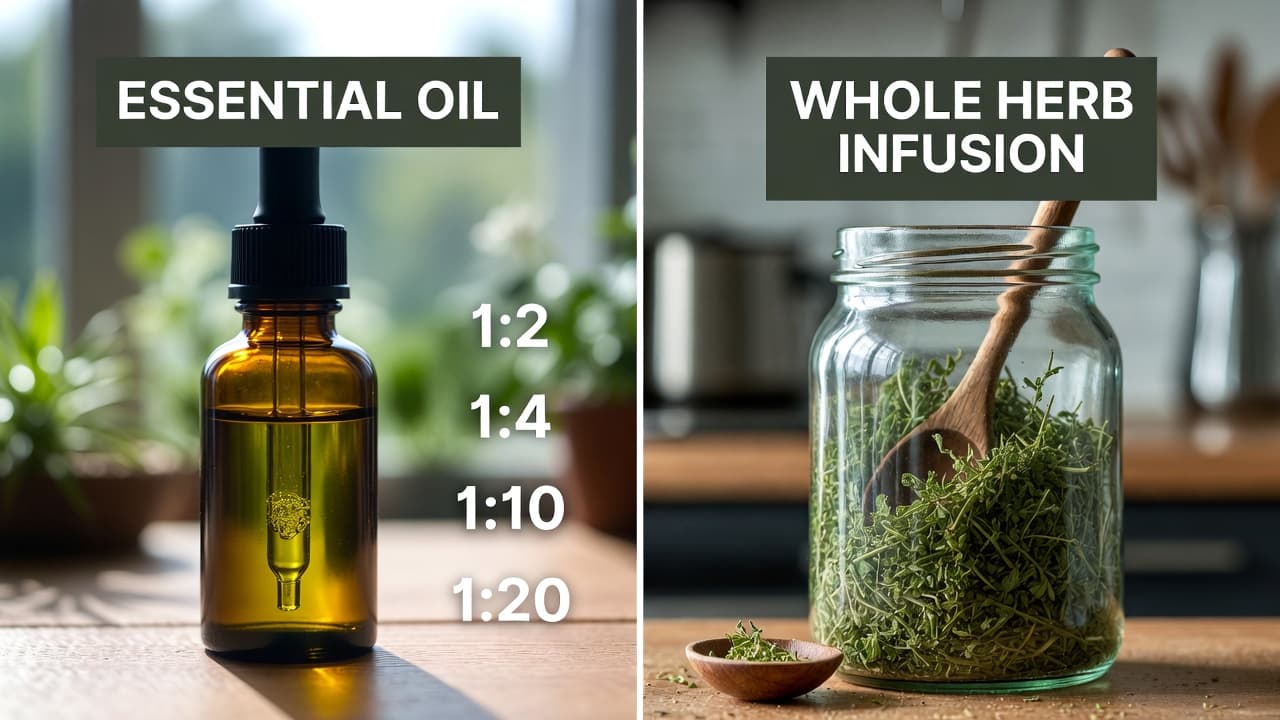
Pattern A contains a botanical extract — probably added in a small percentage to a predominantly synthetic base. The extract was likely purchased as a standardized concentrate from a supplier and stirred in.
Pattern B is a carrier oil that has been infused with the botanical, meaning the plant material and oil spent time in contact before the formulation was made. The oil itself carries the therapeutic character of the plant, not just a fraction of its chemistry.
Neither pattern is inherently dishonest. But they produce fundamentally different products, and "infused with rose hip" on a front panel describes both equally. The ingredient list distinguishes them.
The Greenwashing Patterns Worth Knowing
Latin name theater. Some brands list every ingredient in Latin (INCI nomenclature) to create an impression of botanical complexity. The problem: mineral oil is Paraffinum liquidum. Synthetic fragrance can hide in Parfum. Latin names are not a signal of naturalness — they're required international nomenclature for all cosmetic ingredients, natural and synthetic alike.
The trailing herb. An ingredient list that reads Water, Glycerin, Sodium Lauryl Sulfate, [six more synthetic ingredients], Chamomilla recutita flower extract contains chamomile, technically. The extract is present at a concentration too low to have any meaningful effect on the product's performance or your skin. It's there to justify the word "chamomile" on the front.
"Free from" misdirection. A product can be "paraben-free" while containing other preservative systems with similar safety profiles. "Sulfate-free" shampoos sometimes substitute less well-known surfactants that have comparable irritation potential. The absence of one flagged ingredient is not a guarantee of what's actually in the formula.
Fragrance as the active ingredient. Products that list "essential oils" or "botanical fragrance" in their marketing but have a synthetic fragrance compound in the actual ingredient list are claiming botanical character they don't possess. Fragrance ingredients can be labeled simply as Parfum or Fragrance without disclosure of individual components — a significant loophole.
What a Genuinely Simple Botanical Product Looks Like
A well-formulated herbal balm with nothing to hide has an ingredient list short enough to read in ten seconds:
Rosmarinus officinalis (Rosemary)-infused Olea europaea (Olive) Oil, Cera alba (Beeswax), Melaleuca alternifolia (Tea Tree) essential oil, Tocopherol (Vitamin E)
Every ingredient is recognizable. The carrier oil is named alongside the herb infused into it. The essential oil is a specific plant, not "fragrance." The preservative is a natural antioxidant.
That kind of list is only possible when the formulation started with the herbs. You can't construct it backwards from a synthetic base.
The Question Worth Asking
Before any botanical marketing claim, one question cuts through most of the noise: Where does the herb appear in the ingredient list, and what is it infused into?
If the herb is near the top, infused into a meaningful carrier, you have a botanical product. If it's near the bottom, listed as an extract in a primarily synthetic base, you have a conventional product with a botanical footnote. The difference is real, and the label tells you which one you're looking at — if you know where to look.
The brands with genuinely simple, botanical formulas don't need to hide the ingredient list. They lead with it.