"Organic" is one of the most trusted words in consumer product marketing. It's also one of the most inconsistently applied — particularly in skincare, where the regulatory framework is quite different from what governs food.
Here's what "organic" actually means across the different label patterns you'll encounter, and the one question that cuts through most of the claims.
The Food Organic Framework (And Why Skincare Is Different)
For food, "organic" is relatively straightforward. The USDA National Organic Program (NOP) has defined standards, and products carrying the USDA Organic seal are certified against them by an accredited third-party certifier. "100% organic" means every agricultural ingredient is certified. "Organic" means at least 95%. "Made with organic ingredients" means at least 70%.
Skincare falls into a gray area. If a personal care product contains agricultural ingredients, it can technically apply for USDA organic certification under the same NOP rules — and some do. But unlike food, there is no federal law requiring personal care products to meet any organic standard before using the word. The FDA doesn't regulate or define "organic" for cosmetics.
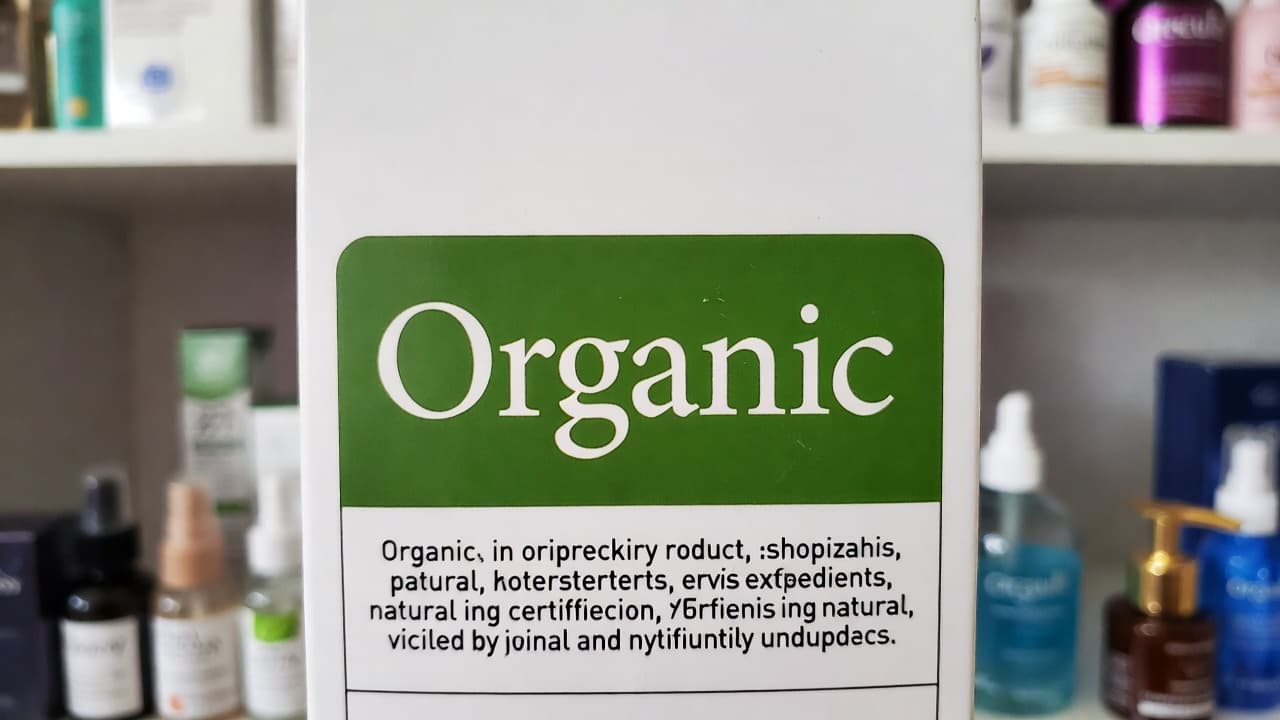
This means a moisturizer can be labeled "organic formula" on the front panel without ever having been certified — and without any penalty for doing so.
The Four Scenarios You'll Encounter
Certified USDA Organic: The product carries the USDA seal and has been certified by an accredited certifier. This is the most rigorous standard and the most verifiable — the certifier's name should appear on the label alongside the seal.
"Made with Organic [Ingredient]": A specific ingredient within the formula is certified organic, but the product as a whole is not. This claim can be completely legitimate (the named ingredient really is certified organic) or it can be applied to a trace ingredient in an otherwise conventional formula.
"Contains organic ingredients": The vaguest version. One or more ingredients may be certified organic, but there's no floor on how much, which ones, or in what concentration.
"Organic" with no certification: The word appears on the front panel but no certifier is named and no seal is present. This is essentially an unsubstantiated claim.
What "Sourced from Organic Producers" Means for Small Makers
Here's where it gets nuanced for small-batch and craft producers: USDA organic certification is expensive, time-intensive, and administratively burdensome. For a small operation making limited quantities, the cost of certification can exceed any practical benefit.
This doesn't mean their ingredients aren't organic. Many small-batch makers source certified organic carrier oils, herbs, and extracts from certified suppliers — the certification exists at the ingredient level, even if the finished product isn't certified as a whole.
In this case, the honest claim is "formulated with certified organic [olive oil / coconut oil / etc.]" — naming the specific certified ingredients rather than claiming blanket "organic" for the whole product. The specificity is itself a signal of honest sourcing.
What Actually Matters at the Ingredient Level
Rather than looking at front-panel claims, ask what the primary ingredients are:
- Are the carrier oils (olive, coconut, jojoba) from certified organic sources?
- If herbs are used, are they grown without synthetic pesticides and herbicides?
- Are any essential oils sourced from organic or wildcrafted material?
These questions lead to more meaningful answers than any front-panel certification claim. For balm products specifically, the carrier oils represent the largest volume ingredient by far. If the olive oil or coconut oil base isn't from a clean source, an organic herb extract added on top doesn't change much about what you're actually putting on your skin.
The Most Honest Label Pattern
A small-batch maker with genuinely clean sourcing will be specific rather than general: "formulated with organic olive oil and organic coconut oil" rather than claiming an "organic formula." Broad claims without specific ingredients named are the pattern worth questioning. Honest sourcing is precise because precision is only possible when you actually know where everything comes from.
An honest organic claim names something. A vague one just borrows the word.