Conventional skincare products routinely carry shelf lives of two to three years. Some longer. Natural and botanical products — genuinely natural ones, not products wearing the label — typically run six months to eighteen months, depending on formulation. The gap between these timelines isn't a deficiency in natural products. It's a direct consequence of what's in them and what isn't.
What Determines Shelf Life
Two main factors limit how long any topical product can be used safely: microbial growth and ingredient oxidation.
Microbial growth is primarily a concern in water-containing products. Bacteria, mold, and yeast require water to grow. Anhydrous (water-free) preparations — balms, salves, and solid butters — are not a hospitable environment for microbial proliferation. This is one of the structural advantages of a beeswax-based balm over a lotion or cream, which must contend with preservation from the moment water enters the formula.
Oxidation is the enemy of oil-containing products, natural or conventional. Carrier oils — olive, coconut, jojoba, sweet almond — are composed of fatty acids that react with oxygen over time. This process is called rancidity, and it degrades both the therapeutic value and the sensory quality of the oil. A rancid oil has a distinctive off-note: crayon-like, sharp, or stale — different in character from the clean, grassy scent the oil had when fresh.
Why Conventional Products Last Longer
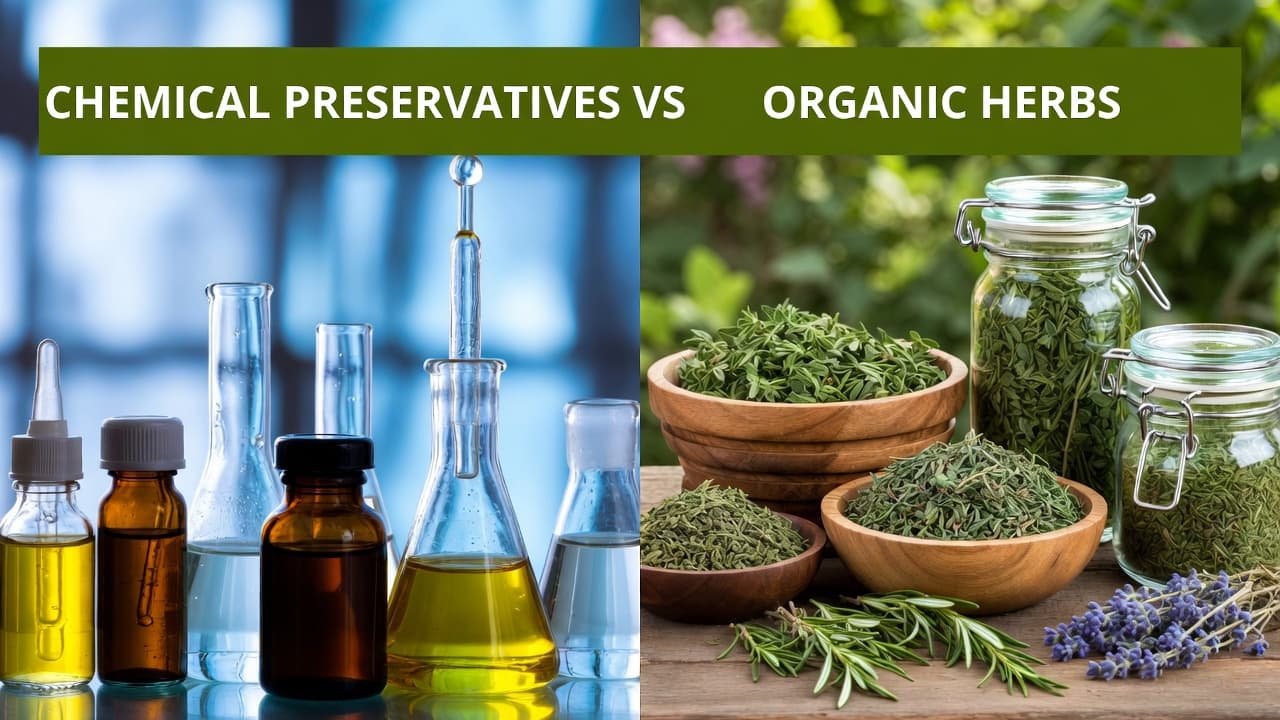
Broad-spectrum synthetic preservatives — parabens, phenoxyethanol, benzyl alcohol, sorbic acid — are highly effective at preventing microbial growth across a wide range of formulations, temperatures, and storage conditions. They're cheap, stable, and thoroughly studied in terms of efficacy.
Many conventional oil-containing products also use highly refined, purified carrier oils with naturally occurring compounds (including antioxidants) largely removed, then add synthetic antioxidants to control oxidation. This produces a predictable, shelf-stable base. It also produces a less complex one — the refining process that extends stability also strips out much of what makes a plant oil therapeutically interesting.
What Preserves Natural Products
Truly natural preservation is a narrower toolkit. Vitamin E (tocopherol) is the most common addition: it's a lipid antioxidant that slows the oxidation of carrier oils and extends their usable life. What it doesn't do is prevent microbial growth — it's not an antimicrobial preservative. Beeswax naturally retains antimicrobial character from the propolis that bees incorporate into it, which offers some inherent protection in a balm, but isn't a complete preservation system for an oil-in-water emulsion.
The most reliable natural strategy is formulation design itself: keeping water out, keeping air exposure minimal, and choosing carrier oils with inherently greater oxidative stability. Olive oil, for example, is high in oleic acid — a monounsaturated fatty acid that is considerably more stable than the polyunsaturated fatty acids in oils like flaxseed or rosehip, which have a much shorter window.
The Freshness Signal
Here's what a shorter shelf life actually tells you: the product contains real, minimally processed botanical oils with their full complement of naturally occurring compounds intact. Those compounds — the same ones that make the oil therapeutically valuable — are also the ones that oxidize.
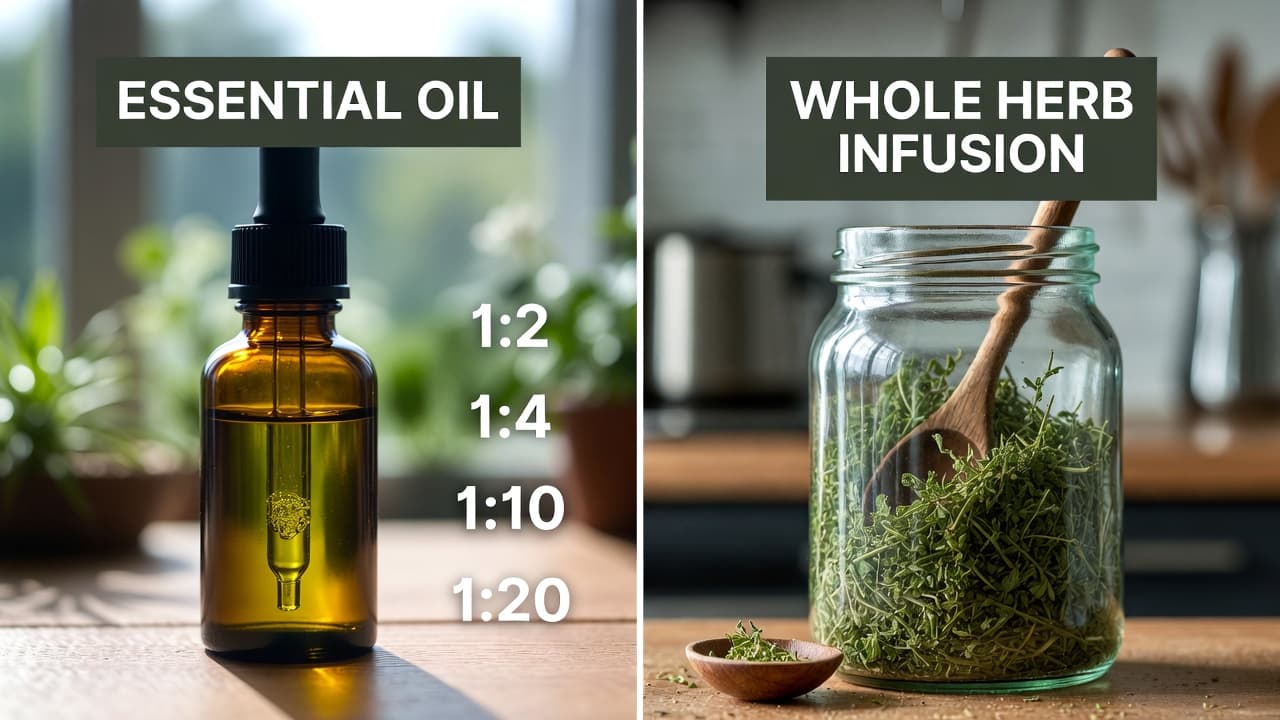
A carrier oil that has been heavily refined to extend its shelf life has also had much of its plant-derived complexity removed. A cold-pressed, unrefined olive oil that carries six weeks of herb-infused compounds into the skin is a fundamentally richer ingredient. It is also a more perishable one. That's not a problem to engineer around — it's an inherent property of using real botanical ingredients.
How to Tell If a Natural Product Has Turned
The signs are primarily olfactory. A balm that has developed a sharp, waxy, or otherwise "off" smell — different from the clean herbal scent it had when new — has oxidized oils. The product isn't harmful at this stage (oxidized vegetable oil won't hurt you), but the therapeutic compounds have degraded and the sensory experience reflects that.
One thing not to confuse with spoilage: slight surface bloom on a beeswax balm. This pale, sometimes dusty-looking coating is caused by temperature fluctuation and is a cosmetic change only — the cocoa butter and beeswax fats are simply recrystallizing. It doesn't affect the product's integrity and can be gently smoothed away with a finger.
Buying Small and Using Fresh
The practical upside of shorter shelf life is that small-batch products are typically fresher at the time of purchase than their mass-market counterparts. A large conventional brand manufactures inventory that may sit in a warehouse for months before it reaches a store shelf. A small-batch maker formulates closer to the point of sale, often within weeks.
If you're purchasing a genuinely natural botanical product, buy in a quantity you'll use within the recommended window. Store it away from heat and direct light, keep the lid closed, and keep water out of the jar. The product will serve you well for its full usable life — and the shorter timeline is simply the honest consequence of using real ingredients.
A product that stays fresh forever was probably never very alive to begin with.